
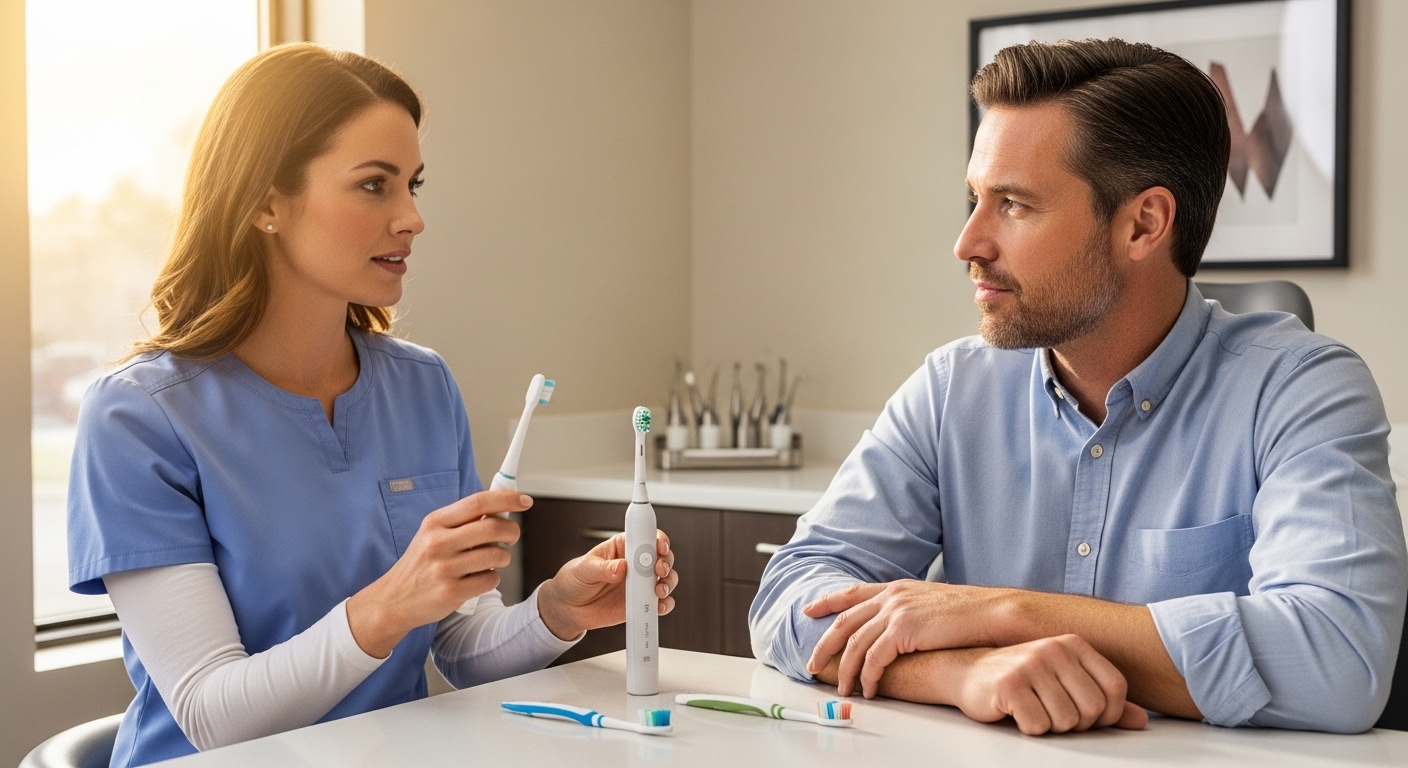
Maintaining excellent oral hygiene is crucial, especially when considering cosmetic dental procedures such as veneers and teeth whitening. Many patients in Kansas City, MO, ponder, “Are electric toothbrushes better than manual ones?” The answer is nuanced, depending on individual preferences and oral health needs. This blog explores both options to help you make an informed decision about your oral hygiene routine.
Understanding Electric vs. Manual Toothbrushes
Choosing between an electric and a manual toothbrush often depends on personal preference and specific oral health needs. Electric toothbrushes offer advanced technology and convenience, which can enhance the dental care routine of many users.
Benefits of Electric Toothbrushes
Electric toothbrushes are often praised for their effectiveness in removing plaque and maintaining gum health. Their rotating brush heads and varying speeds can be particularly beneficial for individuals with certain dental conditions, making them a popular choice.
Advantages of Manual Toothbrushes
On the other hand, manual toothbrushes are familiar, easily accessible, and budget-friendly. They are perfect for those who prefer control over their brushing technique and do not require a charging base or batteries.
Are Electric Toothbrushes Better Than Manual?
An ongoing debate in the dental community explores whether electric toothbrushes are superior to their manual counterparts. This section will examine factors such as plaque removal effectiveness and overall user comfort.
Effectiveness in Plaque Removal
Studies have shown that electric toothbrushes may be slightly more effective at reducing plaque and gingivitis than manual toothbrushes. The oscillating movement can cover more surface area in less time, which might improve overall dental hygiene.
Patient Comfort and Convenience
Electric toothbrushes often enhance the brushing experience due to their ease of use. For people with limited mobility, such as arthritis patients, electric models are significantly more convenient. However, manual toothbrushes are lightweight, travel-friendly, and do not require power.
Cosmetic Dentistry and Its Connection to Oral Hygiene
Proper oral hygiene is crucial when undergoing cosmetic dentistry procedures, such as veneers and teeth whitening, which are specialties at Seville Dental Aesthetics.
Importance of Brushing for Dental Veneers
Patients with dental veneers are required to maintain high standards of oral hygiene to ensure the longevity and appearance of their veneers. Both electric and manual toothbrushes can aid in this, though electric models may offer more thorough cleaning capabilities.
Role in Teeth Whitening
During teeth whitening treatments, maintaining white teeth becomes a priority. While toothbrush type can play a role, the right brushing technique is equally essential for preventing surface stains and achieving that perfect shine.
Factors to Consider When Choosing a Toothbrush
It’s important to evaluate various factors when selecting a toothbrush. Personal oral health needs and budget considerations should steer your decision.
Personal Oral Health Needs
Dental conditions such as sensitive gums or braces may dictate which toothbrush is more suitable for you. Patients with braces might find electric toothbrushes more effective at reaching difficult areas.
Budget Considerations
While electric toothbrushes have a higher initial cost, they may prove cost-effective in the long term due to improved oral health outcomes. Nonetheless, a quality manual toothbrush can still offer excellent results when used correctly.
Cost Implications
Price is a critical determinant when selecting a toothbrush. We explore the cost attributes of electric and manual toothbrushes, addressing long-term oral health savings.
Price Points of Electric vs. Manual Toothbrushes
Electric toothbrushes generally range from $20 to over $200, while manual toothbrushes are often available for under $10. Though initially more expensive, electric options may reduce dental costs over time through better dental maintenance.
Long-Term Savings from Better Oral Health
Investing in a superior toothbrush might save money in the long run by minimizing dental emergencies and maintaining cosmetic procedures like veneers and whitening.
Patient Testimonials and Experiences
Real-world experiences can significantly influence your choice. Here, Kansas City, MO, residents share their insights on electric vs manual toothbrushes and how those impacted their dental health.
Stories from Kansas City, MO, Patients
Kristin from Kansas City has expressed her satisfaction with electric toothbrushes, highlighting how they helped her maintain her veneers. John, however, prefers his manual toothbrush for its simplicity.
Comparisons of User Satisfaction
Many users report greater satisfaction with electric toothbrushes for their time efficiency and thoroughness, while others enjoy the control offered by manual brushing techniques.
Common Myths and Misconceptions
Understanding myths concerning both electric and manual toothbrushes can help patients make informed decisions about oral health.
Debunking Myths About Electric Toothbrushes
Myth: Electric toothbrushes damage enamel. Truth: When used as instructed, electric toothbrushes are safe and effective.
Addressing Concerns about Manual Toothbrush Efficacy
Manual toothbrushes can be as efficient as electric ones if used correctly. The key is the brushing technique rather than technology alone.
Whether you choose an electric or manual toothbrush, what matters most is maintaining consistent, effective dental hygiene practices. At Seville Dental Aesthetics in Kansas City, MO, we offer personalized consultations to help you choose the best tools for your cosmetic dental needs. Schedule an appointment today to explore your options and embrace a healthier, brighter smile.